Back
AI Search
How AI Assistants Pick Local Businesses
A plain-English look at how ChatGPT and Perplexity find the businesses they name, and how to make yours easy to find.
3 min read

A new front door you can't see
When someone asks ChatGPT for "a good HVAC company near Stamford" or asks Perplexity where to get a wedding cake, the assistant answers with a short list of business names. There's no page two to scroll to. If you aren't one of the names, the conversation can end without you.
The businesses that get named aren't necessarily the biggest or the oldest. They're the ones whose information the assistant can actually find, read and check.
The good news: AI assistants aren't magic, and they aren't random. They work from what they can find on the web, which means being easy to find, read and cite is work you can do, not a lottery you have to win.
Where assistants actually get their answers
Most AI assistants lean on two things when answering local questions: live web search results and business listings. In practice that means your website content, your Google Business Profile, your reviews, and mentions of your business on other reputable pages all feed the answer.
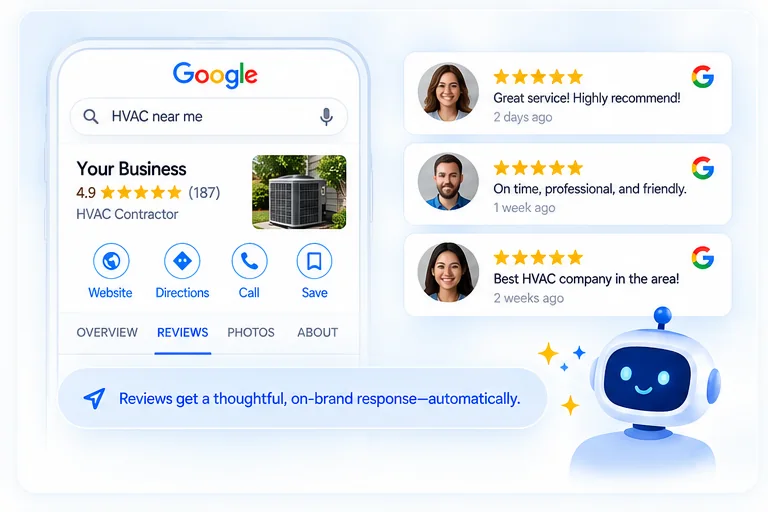
Reviews are part of what an assistant can read, both the star ratings and the text. Recent, detailed reviews with replies show a business that's active and paying attention. A profile where the last reply was years ago leaves an open question.
Your website's job is to answer questions the way an assistant would ask them. Pages that clearly state what you do, where you do it, what it costs, and what makes you different give the model quotable material. Vague brochure copy, like "quality service since 1997," gives it nothing to work with.
What actually moves the needle
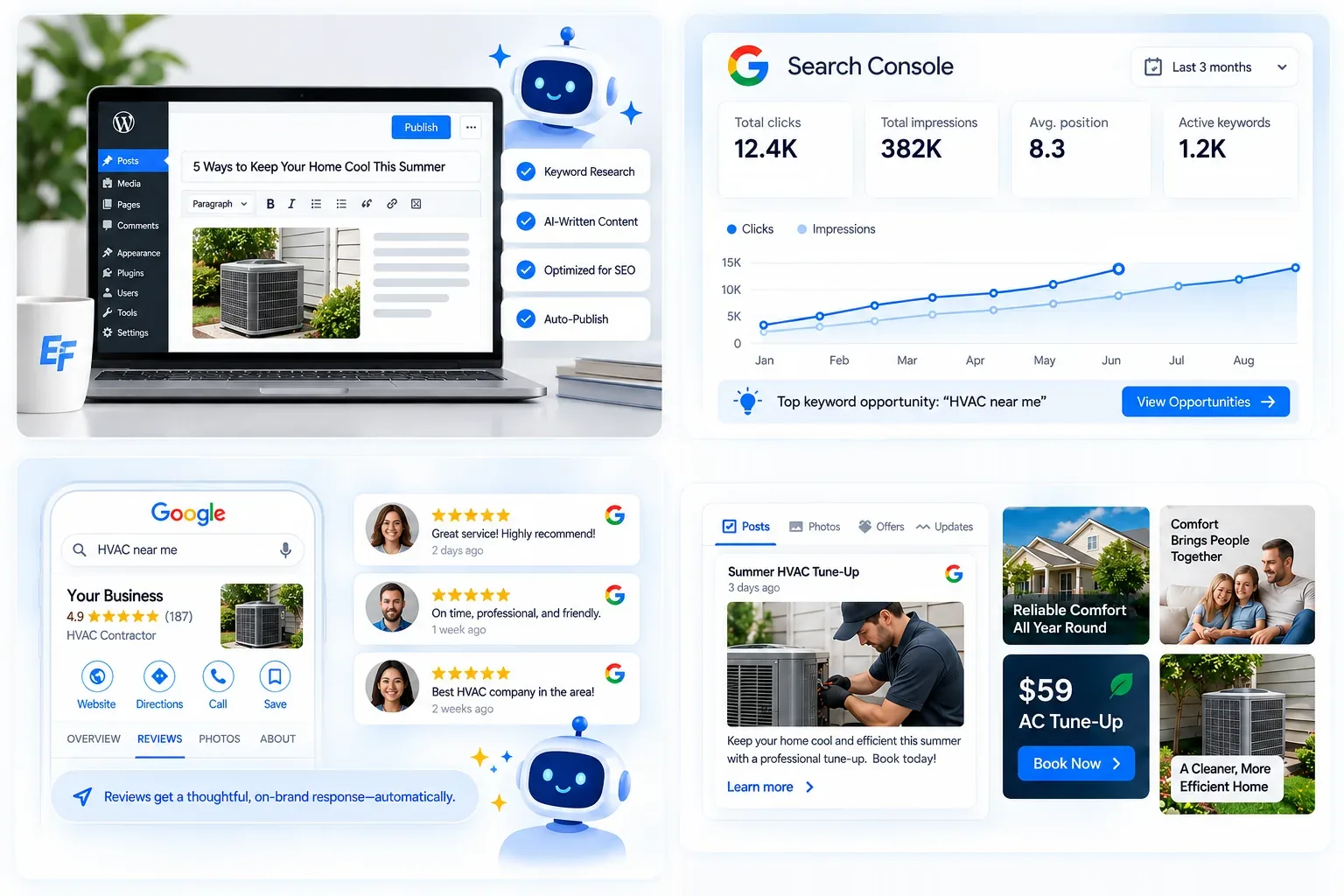
First, publish content that answers real questions in full sentences. If people ask "how much does a furnace tune-up cost in Connecticut," a post that answers that question directly is exactly what an assistant wants to cite. That's why steady, specific content matters for AI search: an assistant can only cite what someone has written.
Second, keep your Google Business Profile genuinely current. Fresh photos, weekly posts, accurate services, and answered reviews all show a living business. An assistant only knows what it can read, and a profile that went quiet two years ago could belong to a company that has since closed.
Third, be consistent everywhere. Your name, address, phone number, hours, and service descriptions should match across your site and your profiles. Contradictions make it harder for anyone, person or machine, to know which details are right.
The compounding part
None of this is a one-time fix. When an assistant searches the web, it finds what's there today, so it helps to publish and update on a rhythm. That's hard to sustain by hand.
That's the real shift AI search brings: an assistant can only work with what's been published about you, and an ad budget doesn't write that for you. A system that publishes weekly, answers every review and keeps your profile fresh gives assistants more current, accurate material about you every month.
More from the blog
Practical guides on local SEO, AI search, and reviews to help your business get found everywhere.