Back
Reputation
Review Replies That Sound Like You
Answering every review matters. Here's how automation keeps up with it without sounding robotic.
3 min read

Why every review deserves an answer
Review responses are the most public customer service you'll ever do. Prospects read them to learn how you treat people, and Google says replying shows customers you value their feedback. A profile where every review gets a thoughtful reply tells a very different story from one where reviews sit unanswered.
The math is what gets in the way. A busy business collects a steady stream of reviews, each deserving a specific, warm reply within a day or two. That's a real weekly time commitment on top of running the business, which is how profiles end up with a trail of unanswered five-star reviews, each one a customer who complimented you publicly and heard nothing back.
What good automation actually does
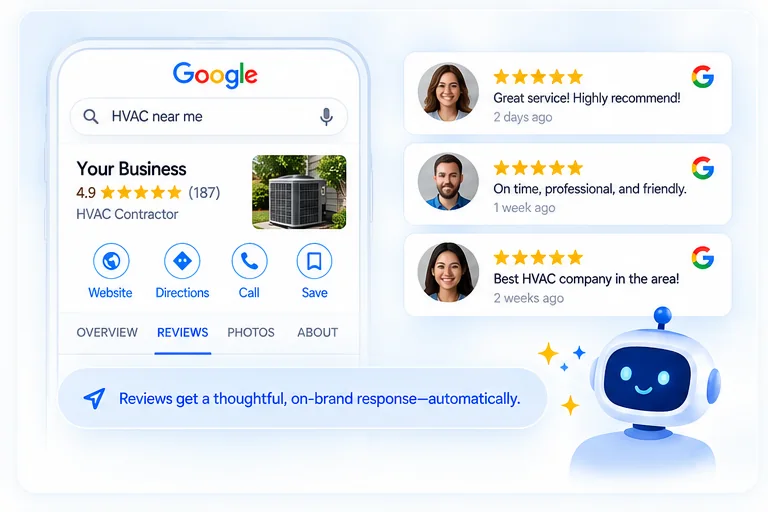
The robotic review reply ("Thank you for your feedback, valued customer!") isn't an automation problem. It's a template problem. Modern AI responses are drafted from the content of each review: they mention the service the customer named, echo their specifics, and vary naturally from reply to reply, the way a thoughtful owner's replies would.
The voice comes from you, once. Good systems follow how your business talks, whether that's warm or professional, first names or formal, emoji or never, and apply it consistently. Ironically, that consistency often beats the DIY alternative, where reply tone depends on who grabbed the tablet and how their day was going.
Speed is automation's quiet advantage. Replies that land promptly, including after the Saturday-night reviews, show customers someone is paying attention. Google's own tips suggest replying in a timely manner.
Handling the bad review
Negative reviews are where owners fear automation most, and where guardrails matter most. The playbook is well established: acknowledge specifically, stay gracious, never argue publicly, and move the conversation offline. A well-built system executes that playbook calmly, which is more than can be said for a stung owner typing at 11pm.
The right setup also lets you decide what needs a human. Requiring your approval on low-star reviews means nothing sensitive posts before you've read it. Automation handles the volume; you handle the exceptions. That division is what makes the whole thing trustworthy.
Keeping it honest
Automation should amplify a real voice, not fake one. Turn on approval for your first few weeks, read the drafts and change anything that doesn't sound like you. Once you trust them, let them post on their own, and every review actually gets an answer.
The goal isn't to remove yourself from your reputation. It's to make sure that no customer who took the time to review you is ever met with silence. Done right, automation doesn't replace the owner's voice. It finally gives that voice the consistency it never had time for.
More from the blog
Practical guides on local SEO, AI search, and reviews to help your business get found everywhere.